




Inside the Waldridge Internal Affairs File: A Timeline That Raises Larger Questions About Leadership and Culture
As Cecil County voters continue evaluating the future direction of local law enforcement leadership, one section of the previously reported Internal Affairs material deserves a closer look.
Buried within the 96-page Elkton Police Department Internal Affairs investigation involving Lieutenant Lawrence Waldridge is a timeline of repeated racially and ethnically charged incidents that investigators ultimately concluded reflected a:
“pattern/history of racial bias.”
While much of the initial public attention focused broadly on discipline and campaign politics, the investigative timeline itself paints a more detailed picture of recurring conduct spanning multiple years, involving multiple officers from different backgrounds.
The pattern documented in witness transcripts and investigative findings did not center on a single off-color remark or isolated misunderstanding. According to investigators, the conduct repeatedly resurfaced over time despite prior concerns, counseling, and disciplinary intervention.
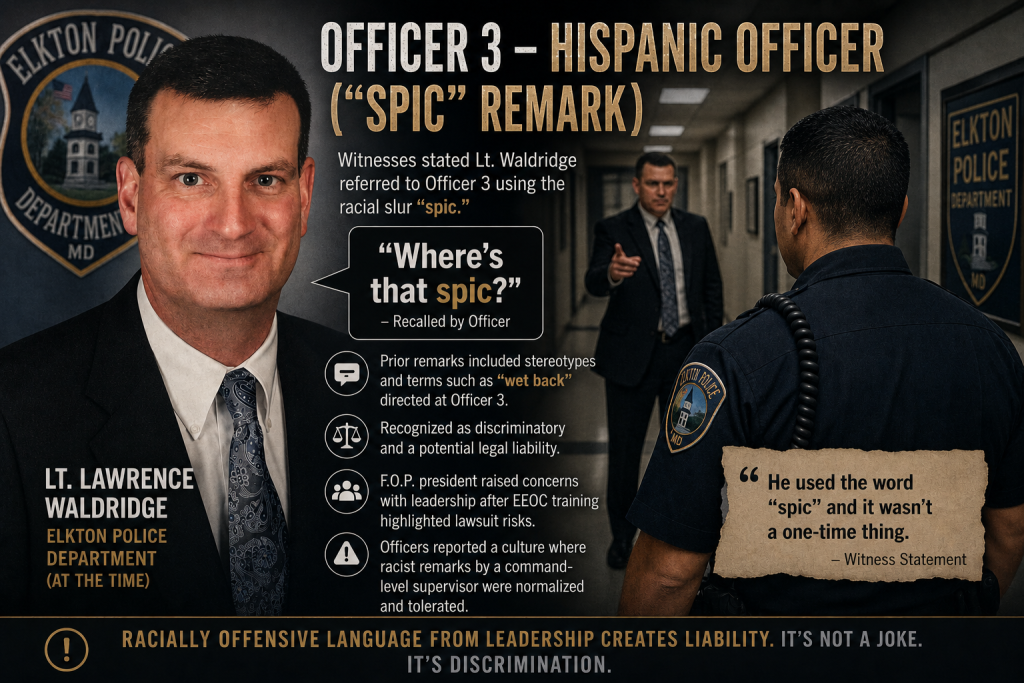
2009: “Where’s that spic?”
One of the earliest incidents documented in the investigation involved a Puerto Rican / Hispanic officer during field training.
According to witness statements, Waldridge walked through a department hallway asking:
“Where’s that spic?”
The report further notes concerns from officers that racially offensive language was becoming normalized within the work environment. Investigators documented internal discussions about potential liability exposure and concerns over how this type of conduct affected professionalism inside the department.
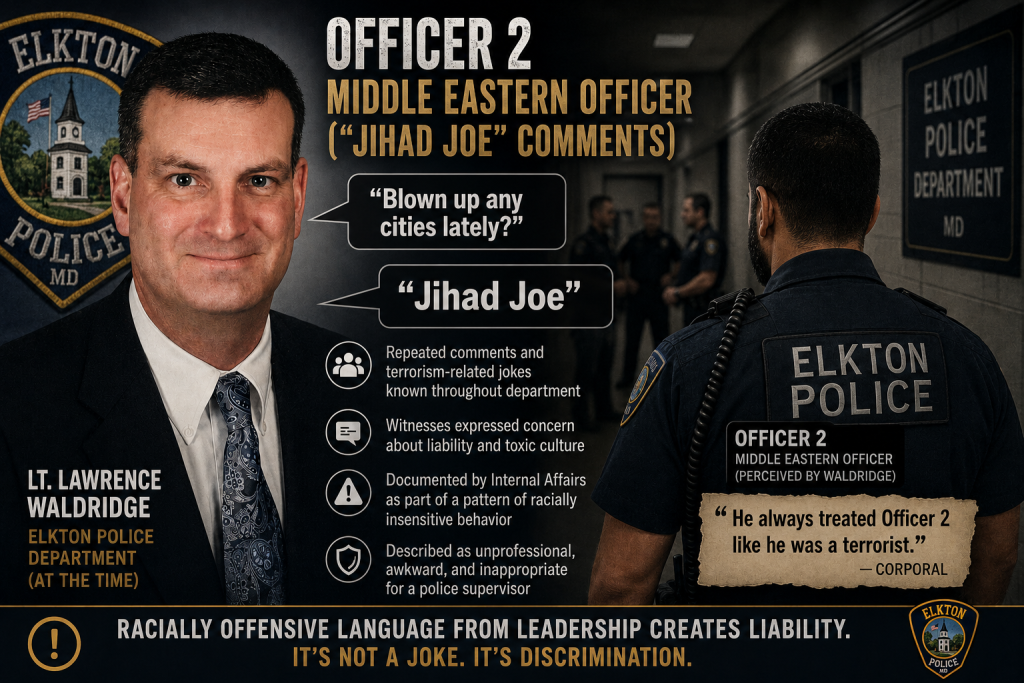
2016: “Jihad Joe” and Terrorism-Based Remarks
Years later, investigators documented another series of incidents involving a Cuban / Hispanic officer.
Witnesses stated Waldridge repeatedly referred to the officer as:
“Jihad Joe”
Additional testimony described recurring comments asking whether the officer had:
“blown up any cities lately.”
Witnesses stated the comments associated the officer with terrorism stereotypes tied to perceived ethnicity or appearance.
The Internal Affairs summary notes officers and F.O.P. representatives expressed concern that the conduct exposed the department to significant EEOC and civil liability risks.
Waldridge reportedly admitted using the nickname but characterized the interactions as “banter.” Investigators ultimately sustained violations involving unbecoming conduct and prejudicial language.
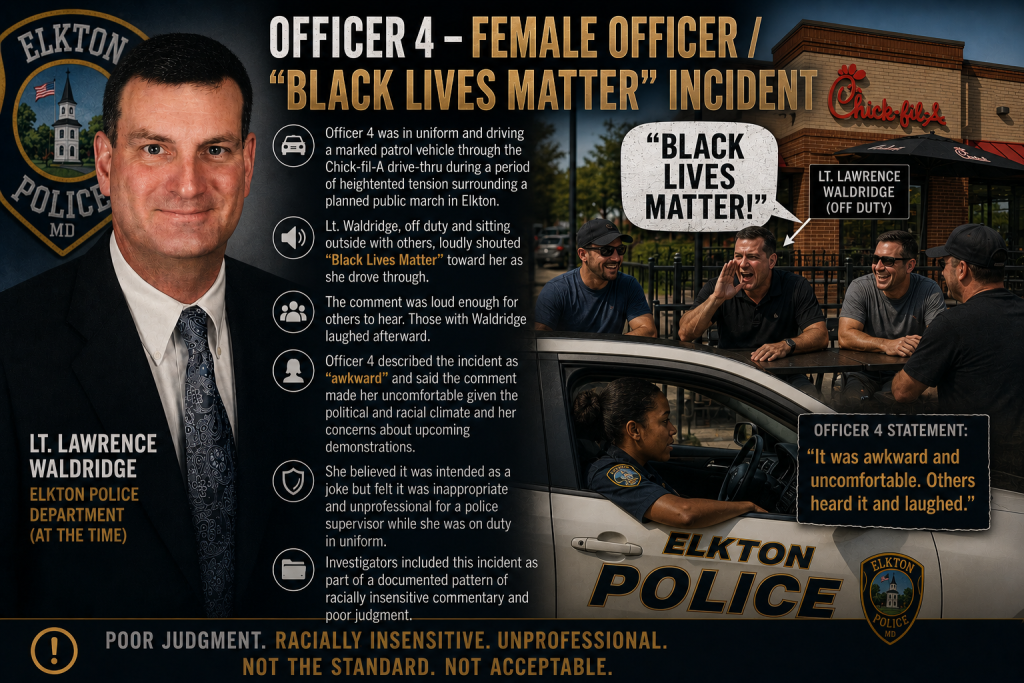
“Black Lives Matter” Incident
Investigators also documented an incident involving a female patrol officer sitting in a marked patrol vehicle at a Chick-fil-A drive-thru during a period of heightened racial and political tension surrounding demonstrations in Elkton.
According to the officer’s statement, Waldridge loudly shouted:
“Black Lives Matter”
The officer described the incident as awkward and inappropriate given the surrounding climate and the fact she was on duty in uniform.
Witnesses stated individuals sitting with Waldridge laughed after the comment.
Investigators included the incident as part of the broader pattern reviewed during the case.
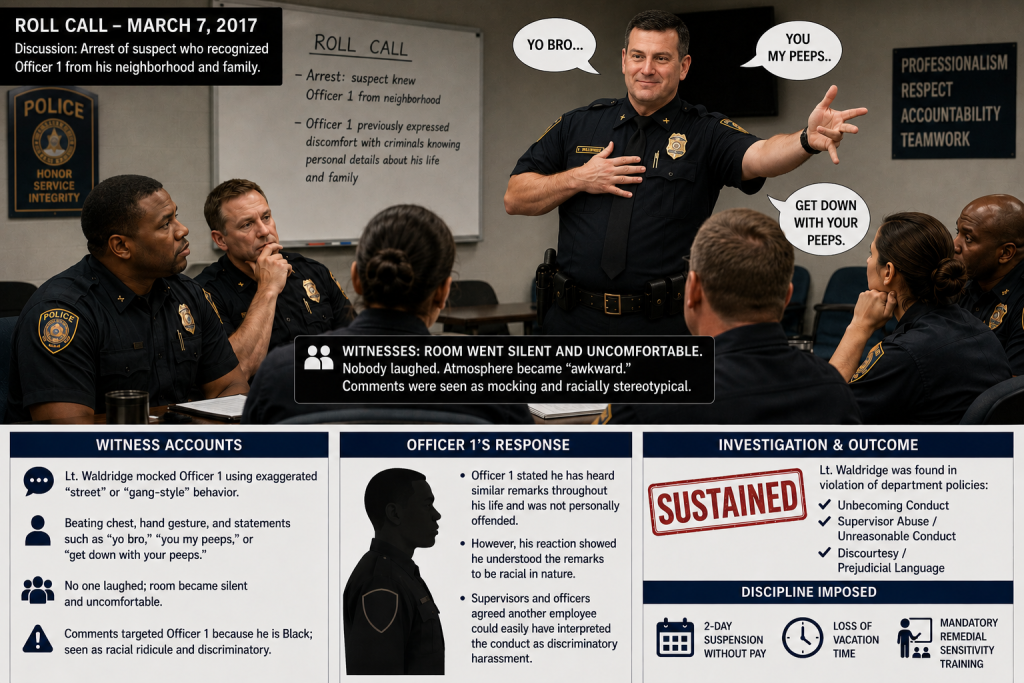
2017 Roll Call Incident
The March 7, 2017 roll call incident became one of the central events in the Internal Affairs case.
According to witness statements, Waldridge mocked an African American officer using exaggerated “street” or “gang-style” language and gestures during discussion involving an arrest.
Witnesses stated Waldridge said:
“yo bro”
“you my peeps”
“get down with your peeps”
Several officers described chest-beating motions and gestures interpreted as mocking racial stereotypes associated with Black urban culture.
According to multiple witness statements:
- the room became silent,
- officers appeared visibly uncomfortable,
- and “nobody laughed.”
Several witnesses stated the conduct crossed the line from joking into racially charged mockery by a supervisor.
Investigators: Conduct Reflected a “Pattern”
The Internal Affairs investigation ultimately sustained violations involving:
- unbecoming conduct,
- supervisor abuse/unreasonable conduct,
- discourtesy/prejudicial language,
- and hostile work environment concerns.
Discipline reportedly included:
- a two-day suspension without pay,
- loss of leave,
- formal counseling,
- and mandatory sensitivity training.
What stands out in the investigative timeline is not simply the language itself, but the recurrence of similar conduct involving different demographic groups over an extended period of time.
The file repeatedly references witness concerns about:
- professionalism,
- department liability,
- workplace culture,
- and the impact supervisory behavior can have throughout an agency.
As discussions continue about the future direction of law enforcement leadership in Cecil County, the Internal Affairs timeline provides a detailed record that many readers may not have fully examined the first time around.
Disgusting and is a disgrace to the uniform. This cop is the reason so many people dislike the police, including myself!!!