




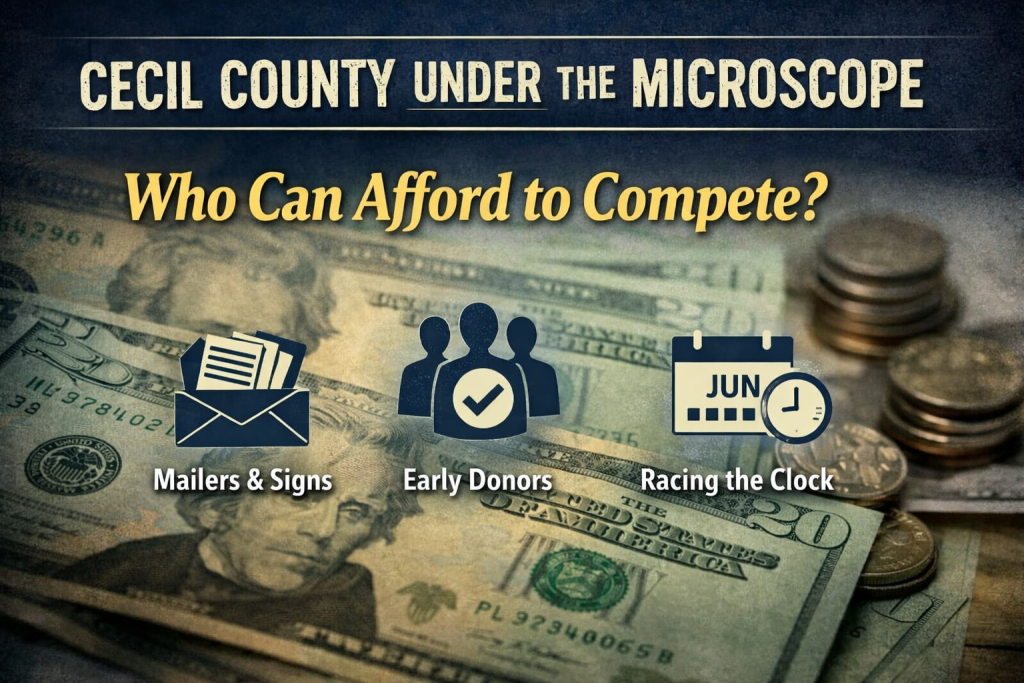
Segment 3A Who Can Afford to Compete?
In the last segment, we explained why primaries — not general elections — often decide outcomes in Cecil County.
That raises an obvious next question:
Who can afford to compete in those primaries in the first place?
The answer helps explain why the same names, interests, and outcomes keep repeating — regardless of party labels.
Running for office isn’t free — even locally. Competitive campaigns require early money, time away from work, and organization long before most voters are paying attention.
Early money matters more than total money. Candidates who raise funds early can build visibility, discourage challengers, and shape the race before it truly begins.
Public campaign finance records show that most funding does not come from everyday residents, but from business owners, developers, utilities, professional firms, and political committees.
One local example is the Cecil Business Leaders for Better Government (CBL) PAC, which publicly reports receiving money from business and development interests and spending it to support preferred candidates.
Party labels don’t tell the whole story. In a county dominated by one party in general elections, candidates often adapt affiliations to remain viable, and donors support people rather than party platforms.
For many residents, the barriers to running are real — financial risk, workplace pressure, and fear of retaliation keep good people from ever entering the race.
This is not necessarily about corruption. It’s about structure — and structure shapes outcomes.
Next up: how institutions multiply this advantage